 Image 1 of 2
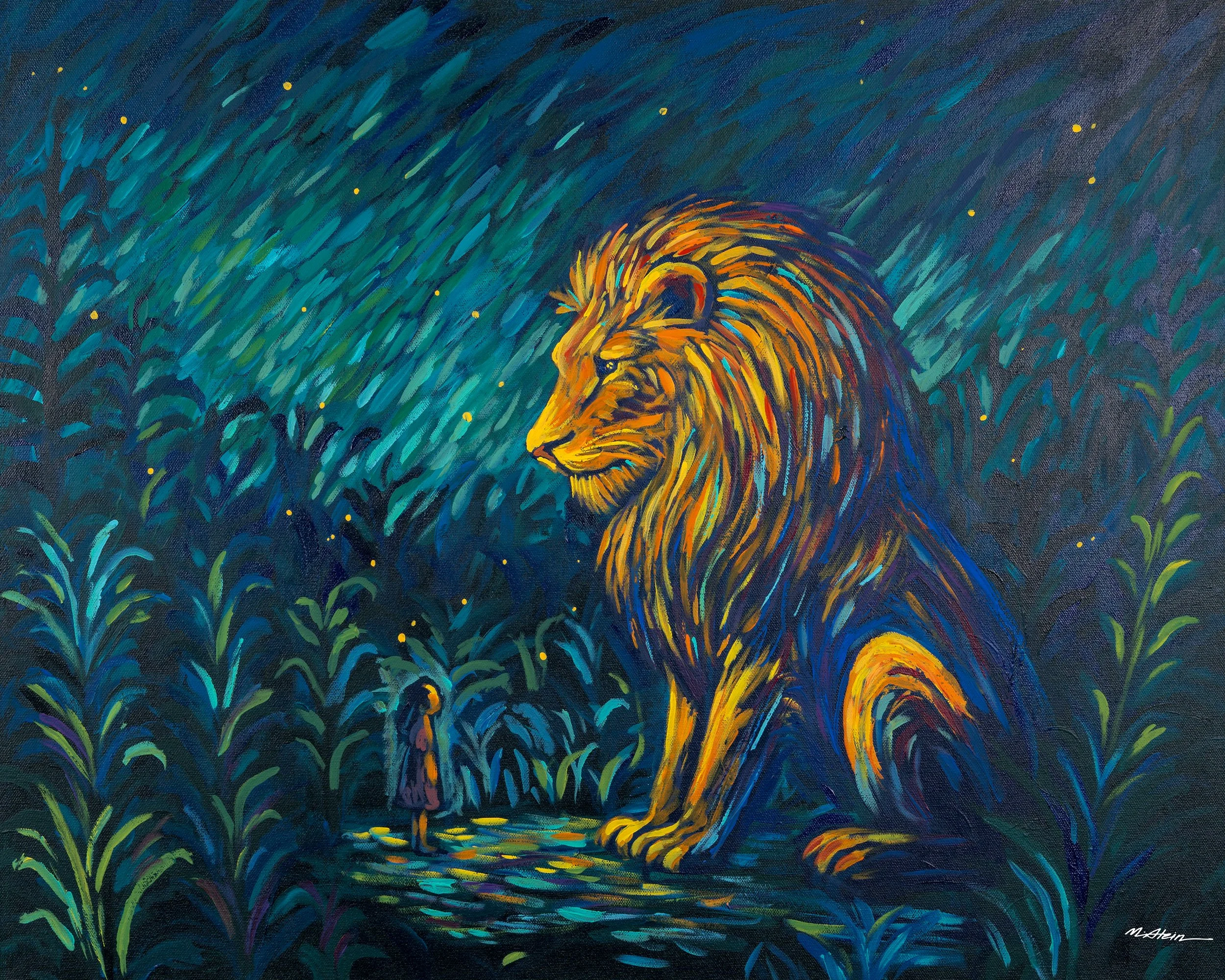 Image 2 of 2
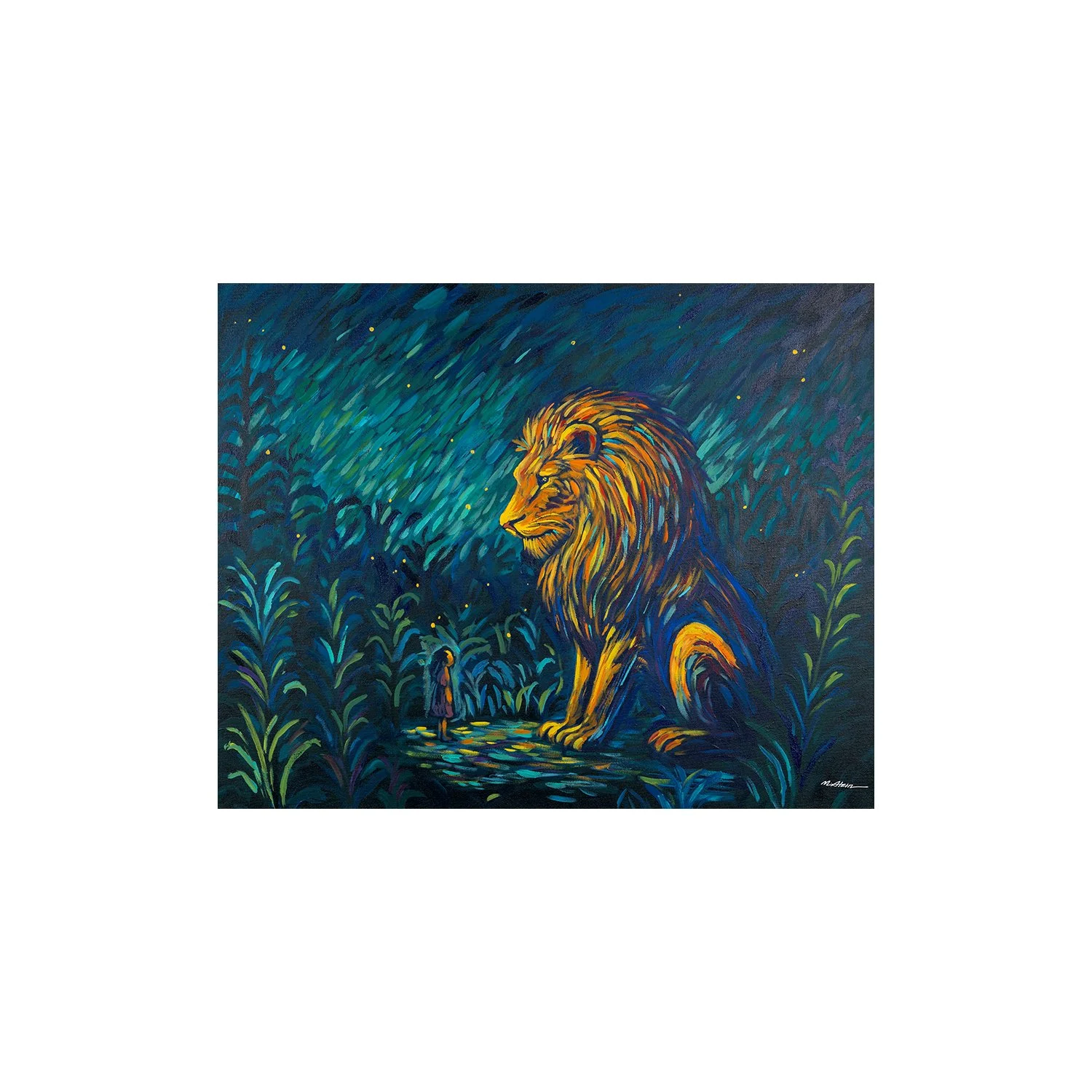
Lion of Judah is a portrait of strength restrained by mercy—power that does not need to prove itself. Inspired by Christ as the victorious King, this piece reflects authority rooted not in fear, but in righteousness, faithfulness, and love.
The lion stands watchful and unshaken, illuminated against the surrounding darkness. His posture is calm, deliberate, and assured—symbolizing Christ’s sovereignty over all creation. Before Him stands a small figure, vulnerable yet unafraid, reminding us that true safety is found not in our own strength, but in the presence of the One who reigns.
This painting speaks to the paradox of the Gospel: the Lion who conquers is the same Savior who invites the weak, the weary, and the trusting to draw near. Lion of Judah invites the viewer to stand in awe—not of terror, but of hope—knowing that the King who rules is also the King who protects.
“Weep no more; behold, the Lion of the tribe of Judah, the Root of David, has conquered…”
— Revelation 5:5 (ESV)
Lion of Judah is a portrait of strength restrained by mercy—power that does not need to prove itself. Inspired by Christ as the victorious King, this piece reflects authority rooted not in fear, but in righteousness, faithfulness, and love.
The lion stands watchful and unshaken, illuminated against the surrounding darkness. His posture is calm, deliberate, and assured—symbolizing Christ’s sovereignty over all creation. Before Him stands a small figure, vulnerable yet unafraid, reminding us that true safety is found not in our own strength, but in the presence of the One who reigns.
This painting speaks to the paradox of the Gospel: the Lion who conquers is the same Savior who invites the weak, the weary, and the trusting to draw near. Lion of Judah invites the viewer to stand in awe—not of terror, but of hope—knowing that the King who rules is also the King who protects.
“Weep no more; behold, the Lion of the tribe of Judah, the Root of David, has conquered…”
— Revelation 5:5 (ESV)